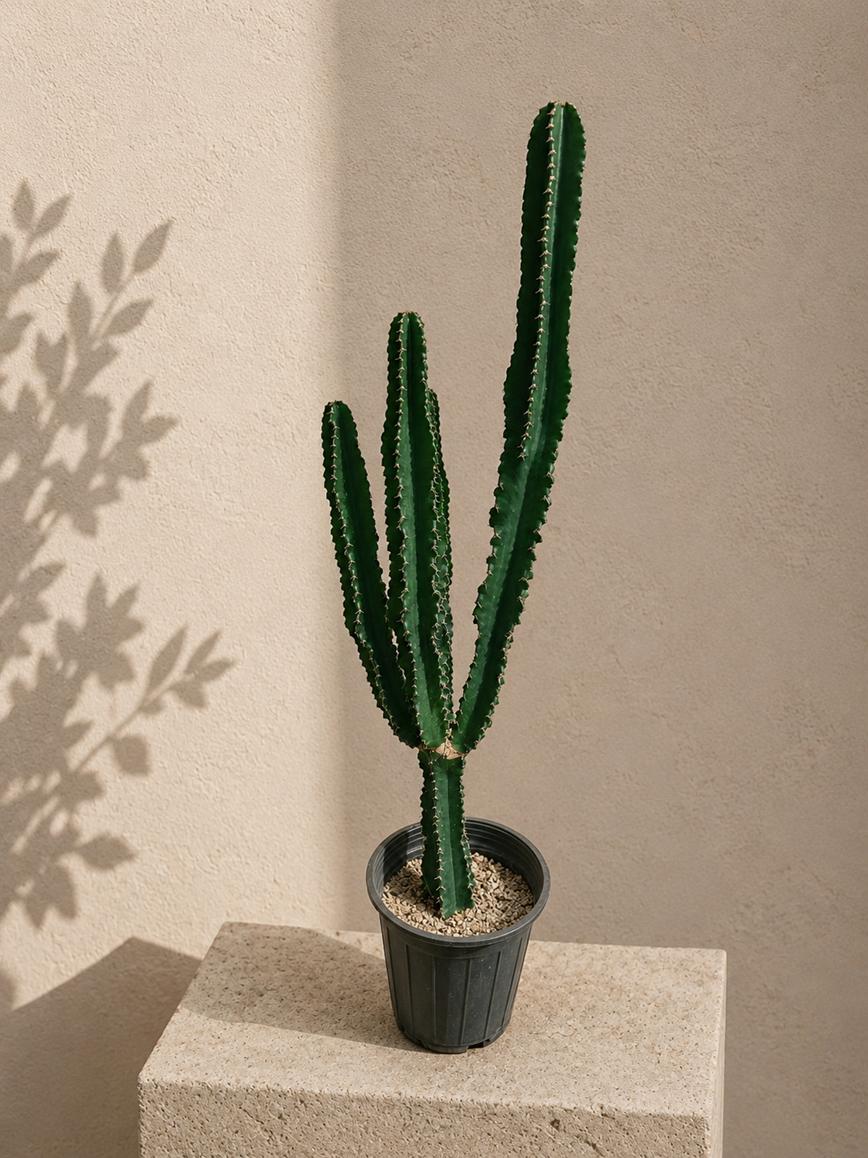
Euphorbia ingens, commonly known as the Candelabra Tree, is a striking architectural succulent native to Southern Africa. Renowned for its sculptural form and exceptional drought tolerance, it has become a favorite in modern interior design, where its bold silhouette creates a dramatic focal point.
Appearance
This plant features thick, upright green stems that branch from the base, forming a shape reminiscent of a traditional candelabra. The ridged stems are lined with small protrusions that resemble cactus spines but are actually protective structures characteristic of the species.
Light Requirements
Euphorbia ingens thrives in very bright, direct sunlight. Unlike many common houseplants, it benefits from several hours of full sun each day and should ideally be placed near a south-facing window when grown indoors. Insufficient light can cause weak, elongated growth and thinner stems.
Watering
This is an extremely drought-tolerant plant that requires minimal watering. Allow the potting mix to dry out completely between waterings, and during the winter dormant period, reduce watering to about once a month—or even less, depending on conditions. Overwatering is the most common cause of root rot and plant decline.
Humidity
Average indoor humidity and dry air are perfectly suitable. Misting is unnecessary and excessive humidity may increase the risk of fungal spots or other moisture-related issues.
Soil
Use a fast-draining cactus or succulent mix with added coarse sand, pumice, or gravel to ensure excellent drainage and prevent water from collecting around the roots.
Temperature
The ideal growing temperature ranges from 21°C to 32°C (70°F–90°F). While highly tolerant of heat, the plant is sensitive to cold and should be protected from temperatures below 10°C (50°F), which can damage its fleshy stems.
Toxicity
Euphorbia ingens contains a milky white latex sap that is highly irritating and toxic. Contact with the skin or eyes may cause severe irritation, burning, inflammation, or blistering. Keep the plant away from children and pets, and handle it carefully.
Care Tip
As the plant grows taller, it naturally leans toward the light and can become top-heavy. Planting it in a sturdy, heavy terracotta or ceramic pot helps improve stability. If necessary, provide additional support with a stake, and always wear protective gloves when pruning or repotting to avoid contact with the irritating sap.



Reviews
There are no reviews yet.