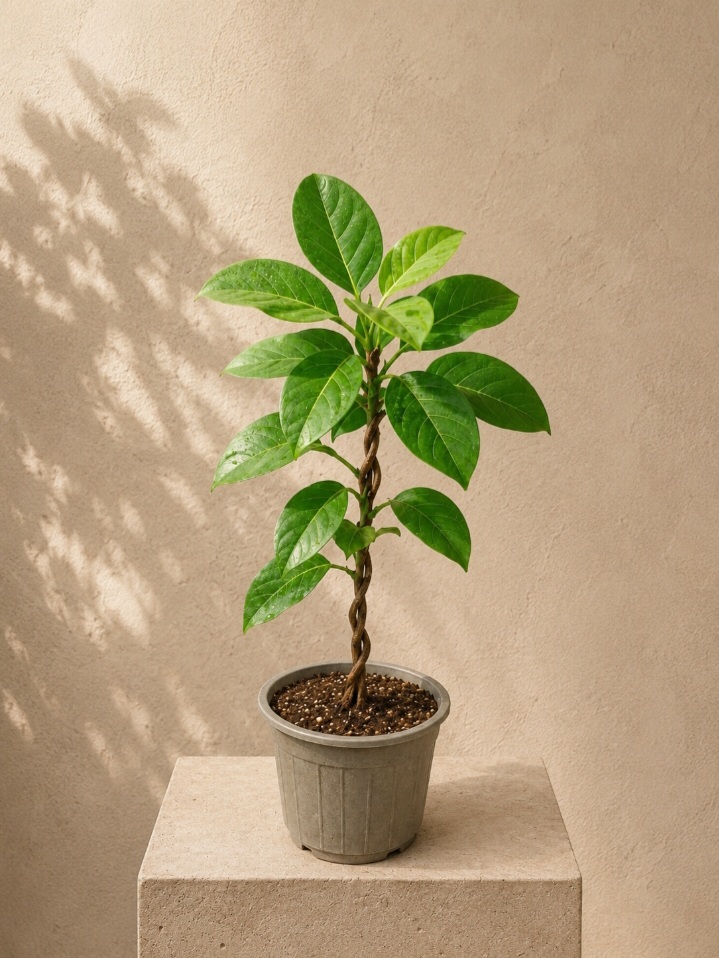
Ficus Altissima (Council Tree / Golden Ficus)
Ficus altissima, commonly known as the Golden Ficus, is a member of the ficus family and is prized for its striking variegated foliage. Its elegant appearance and unique leaf patterns make it one of the most luxurious and eye-catching indoor ficus plants.
Appearance
The plant features broad, oval-shaped, leathery leaves. Its most distinctive characteristic is its beautiful variegation: deep green foliage splashed with irregular patches of bright yellow, lime green, or creamy tones, giving each leaf the appearance of being hand-painted.
Light
To maintain its vivid variegated colors, bright indirect light is essential. Strong direct sunlight—especially through windows during the summer—can scorch the yellow portions of the leaves, while insufficient light may cause the foliage to revert to a more solid green, reducing its ornamental appeal. An east- or west-facing window with filtered light is ideal.
Watering
Water regularly, but avoid overwatering, as the plant is sensitive to soggy soil. The best time to water is when the top 5–7 cm (2–3 inches) of the soil has dried out. Excess watering can lead to sudden yellowing and leaf drop.
Humidity
Like most ficus species, it enjoys tropical humidity. Although it adapts well to average indoor conditions, it performs best with 40–60% relative humidity. During winter, when indoor heating reduces humidity, using a cool-mist humidifier or lightly misting the foliage can help keep the leaves healthy and vibrant.
Soil
Provide a rich, lightweight, well-draining growing medium. A blend of peat moss, coco peat, perlite, and a small amount of vermicompost offers excellent nutrition while allowing excess water to drain quickly.
Temperature
The ideal temperature range is 18–27°C (64–81°F). Ficus Altissima is highly sensitive to sudden temperature fluctuations, cold drafts from air conditioners, and hot air from heaters. Temperature stress may cause the plant to shed its leaves.
Toxicity
This plant contains a milky white latex sap and is toxic to cats, dogs, and children if ingested. It may cause irritation of the mouth, stomach, and digestive tract, so it should be kept out of reach of curious pets and young children.
Golden Tip
The broad leaves of Ficus Altissima tend to collect dust, which can interfere with photosynthesis. At least once a month, gently wipe both sides of the leaves with a soft, damp cloth. This not only keeps the plant looking fresh but also helps discourage pests such as spider mites.


Reviews
There are no reviews yet.