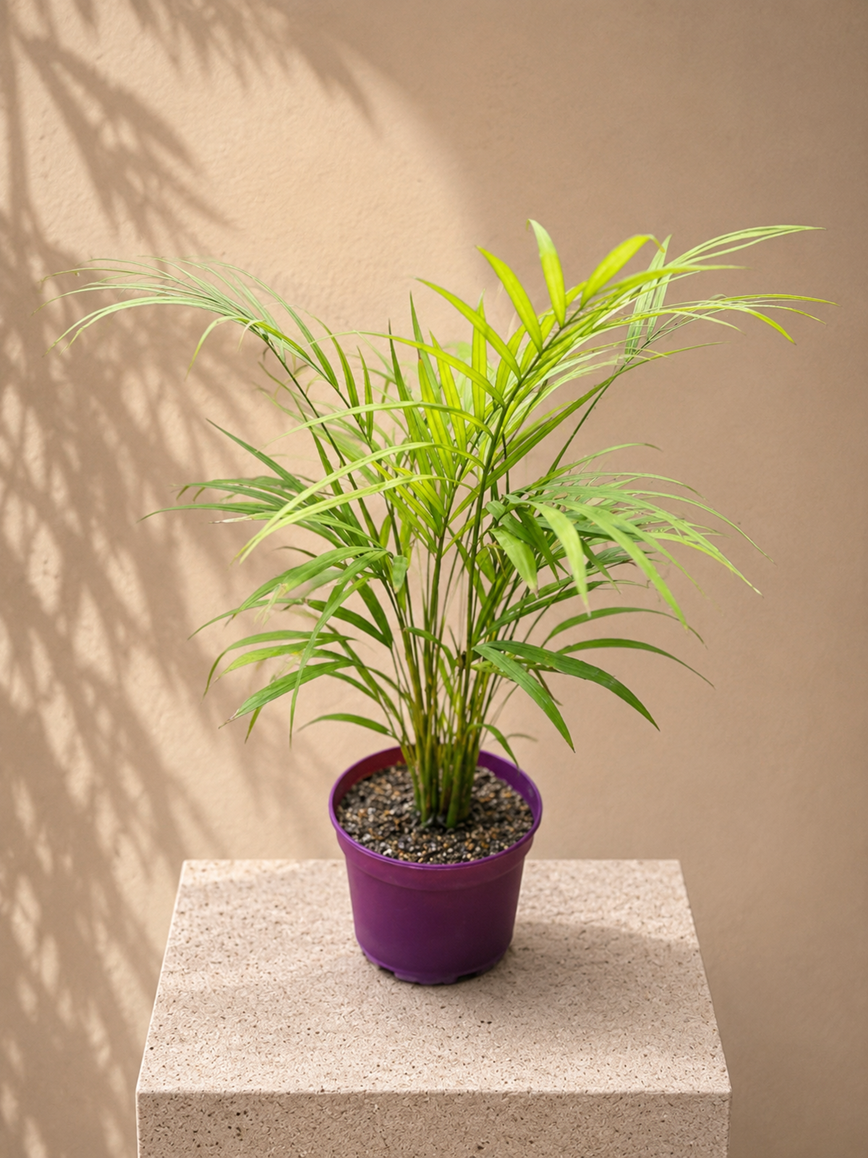
Areca Palm (Areca Palm / Butterfly Palm)
The Areca Palm, also known as the Butterfly Palm, is one of the most popular houseplants for bringing a tropical feel into indoor spaces. Compared to low-maintenance plants such as ZZ plants or staghorn ferns, it requires a bit more care and attention to thrive.
Appearance
The plant features long, slender, gracefully arching fronds that resemble butterflies in flight. With its relatively fast growth rate, it can develop into a large, elegant specimen that makes a striking decorative statement.
Light
The Areca Palm prefers bright, indirect light. A location near a south- or east-facing window with filtered sunlight is ideal. Direct sunlight can quickly scorch the leaves, causing them to turn brown.
Watering
This palm is sensitive to watering practices. Keep the soil consistently lightly moist, but never waterlogged. Avoid letting the soil dry out completely; instead, water when the top 2–3 cm (about 1 inch) of soil feels dry.
Humidity (Essential)
High humidity is essential for healthy growth. Dry indoor air often causes the leaf tips to turn brown.
Recommendation: Place the pot on a pebble tray with water, mist the foliage regularly, or use a cool-mist humidifier nearby to maintain adequate humidity.
Soil
Use a light, well-draining potting mix. A blend of leaf mold or quality potting soil, peat moss, and perlite provides an ideal growing medium.
Temperature
The ideal temperature range is 18–27°C (64–81°F). The Areca Palm prefers stable conditions and is highly sensitive to sudden temperature changes as well as direct drafts from air conditioners or heaters.
Benefits
It is considered one of the best air-purifying houseplants and can also help increase indoor humidity, contributing to a more comfortable living environment.
Toxicity
The Areca Palm is non-toxic to both humans and pets, making it a safe choice for households with children, cats, and dogs.
Golden Tip
If the tips of the fronds begin turning brown, there is a high likelihood that the problem is caused by low humidity or poor water quality, such as water containing high levels of chlorine or dissolved minerals. Using cooled, previously boiled water or other low-mineral water sources can help keep the foliage healthy.


Reviews
There are no reviews yet.