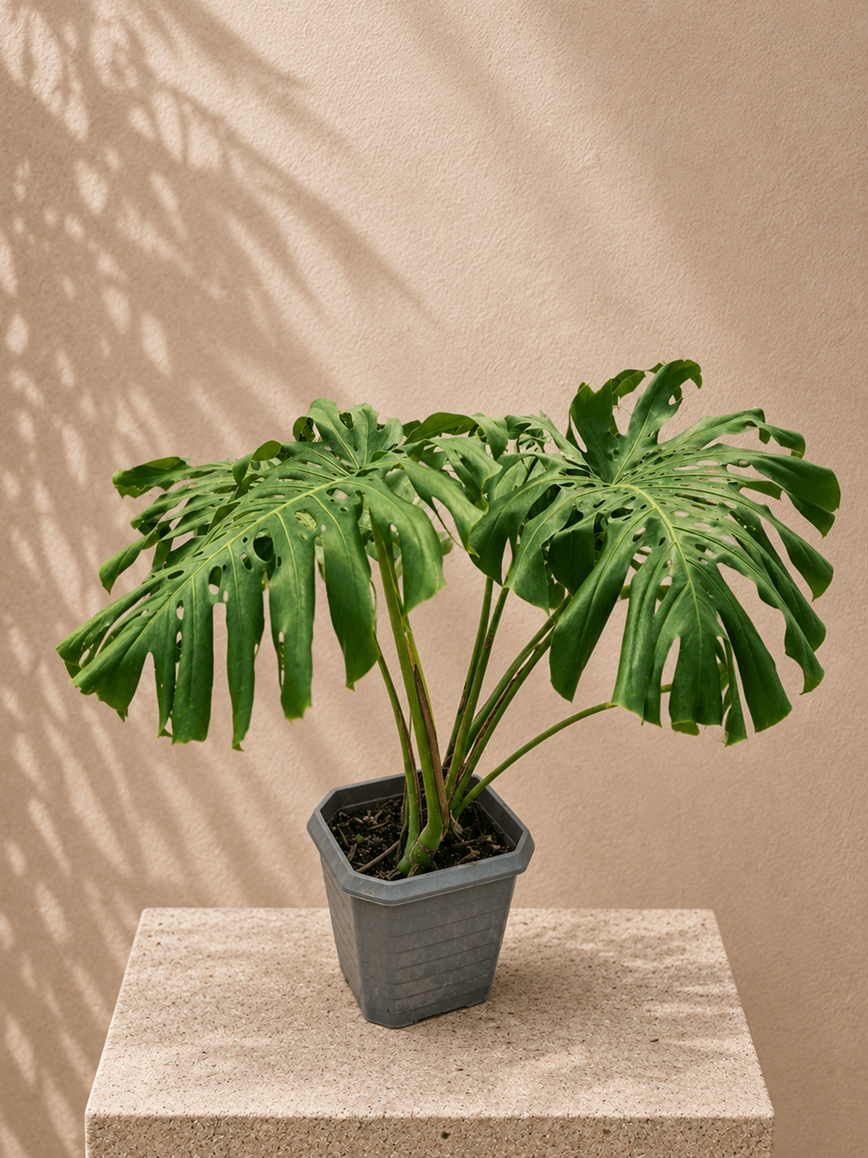
Monstera deliciosa (Swiss Cheese Plant)
Monstera deliciosa, commonly known as the Swiss Cheese Plant, is one of the most popular houseplants in the world. Famous for its large, glossy leaves with distinctive splits and holes, it has become an icon of modern interior design and tropical-inspired spaces. Given adequate light and proper care, Monstera is a vigorous climbing plant that grows quickly and can occupy a substantial amount of space.
Appearance
The plant produces broad, heart-shaped leaves that develop natural splits and holes—known as fenestrations—as they mature. Thick stems and aerial roots, which help the plant climb and absorb moisture in its natural habitat, are among its defining characteristics.
Light
Monstera thrives in bright, indirect light. Filtered sunlight near an east-facing window or behind a sheer curtain is ideal. Insufficient light can prevent the leaves from developing their characteristic fenestrations, while intense direct sunlight may scorch the foliage.
Watering
Water when the top 2–3 cm (about 1 inch) of soil feels dry. Monstera dislikes prolonged drought but is also sensitive to waterlogged soil, which can lead to root rot. It generally requires more frequent watering during the growing season and less during winter.
Humidity
As a tropical plant, Monstera prefers high humidity. In dry indoor environments, using a humidifier or placing the pot on a pebble tray can help maintain healthy foliage and support vigorous growth.
Soil
Use a rich, airy, and well-draining potting mix. An ideal blend includes peat moss, coco peat, perlite, and a small amount of vermicompost to provide both nutrients and excellent drainage.
Temperature
The ideal temperature range is 18–27°C (64–81°F). Monstera is sensitive to cold and should be kept in temperatures above 15°C (59°F).
Toxicity
This plant is toxic to humans and pets if ingested. It contains calcium oxalate crystals, which can cause severe irritation and burning of the mouth, lips, tongue, and throat.
Golden Tip
For optimal growth and larger leaves, provide a sturdy support such as a moss pole or wooden stake so the aerial roots can attach and climb. In addition, wipe the large leaves with a damp cloth every couple of weeks to remove dust, allowing the plant to photosynthesize more efficiently and maintain its lush appearance.


Reviews
There are no reviews yet.